Psychology
Curriculum Vision
Our Psychology curriculum is designed to inspire curiosity about human behaviour and mental processes, while fostering critical thinking, empathy, and scientific inquiry. We aim to empower students with the knowledge and skills to understand themselves and others, preparing them to become reflective, responsible, and informed citizens in an increasingly complex world.
Curriculum Intent
Our intention is to develop students’ knowledge of psychological theories, studies, and core concepts from a range of perspectives. Build scientific literacy by teaching research methods, data analysis, and evaluation skills. Encourage independent and collaborative learning through discussion, investigation, and reflection. Promote understanding and tolerance of individual differences and diversity in behaviour and experience. Equip students with transferable skills such as critical analysis, effective communication, and problem-solving. Inspire progression to further study or careers in psychology and related fields such as health, education, social care, or law.
By the end of the course, students will be confident in applying psychological knowledge to real-life contexts, evaluating the impact of psychological research on society, and thinking critically about the world around them. We strive to make Psychology an engaging and empowering subject that nurtures a lifelong interest in the human mind and behaviour.
A video introduction to our Psychology course in LPGS6 (our co-educational Sixth Form)
Course Description:
Psychology is the scientific study of the human mind and behaviour. An education in psychology helps us to develop a better understanding of ourselves as well as the minds and behaviours of others.
Studying psychology enhances our literacy and numeracy skills, it is therefore valued in the workplace and further study. The study of psychology also teaches us to critically assess data and theories. Our intent is that the curriculum we offer here at LPGS fosters the development of numerate and literate students who are able to critically analyse the world around them and celebrate human differences.
The AQA GCSE specification we follow provides an excellent introduction to psychology and provides a solid foundation from which to progress on to further psychology courses, whilst also equipping students with academic skills useful in a range of subjects at a higher level. The course deals with many current and exciting areas of psychological research. This engaging and effective qualification introduces students to the fundamentals of psychology, developing critical analysis, independent thinking and research skills.
Research methods is a core part of studying psychology. On this course, knowledge of research methods is gained through classroom experience of practical psychology and is assessed using scenario-based questions.
Method of Assessment:
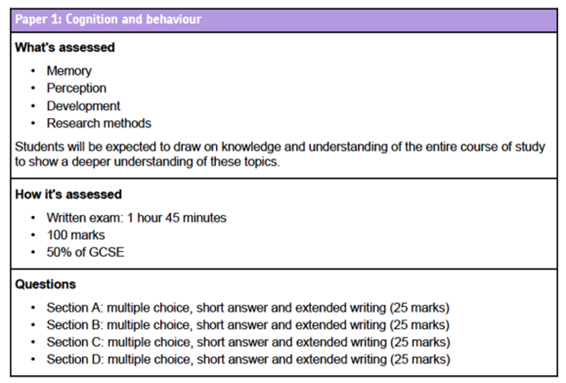
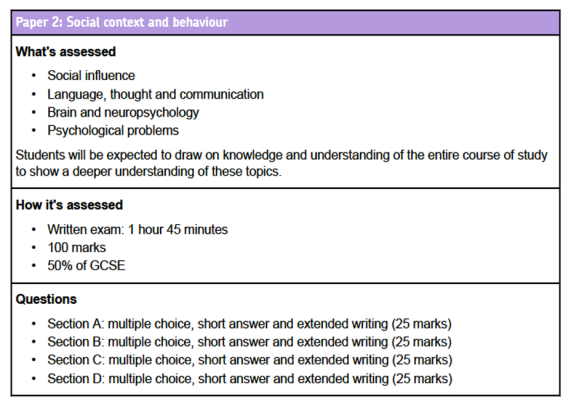
Below is a summary of the topics covered in the course and how they are assessed.